User Research & Testing · 2026
Festo UX Review
Evaluating the usability of Festo’s login system across connected platforms to improve Single Sign-On and trust.
- Year
- 2026
- Role
- User Research, User Testing
- Category
- User Research & Testing
- Tools
- Figjam
Introduction
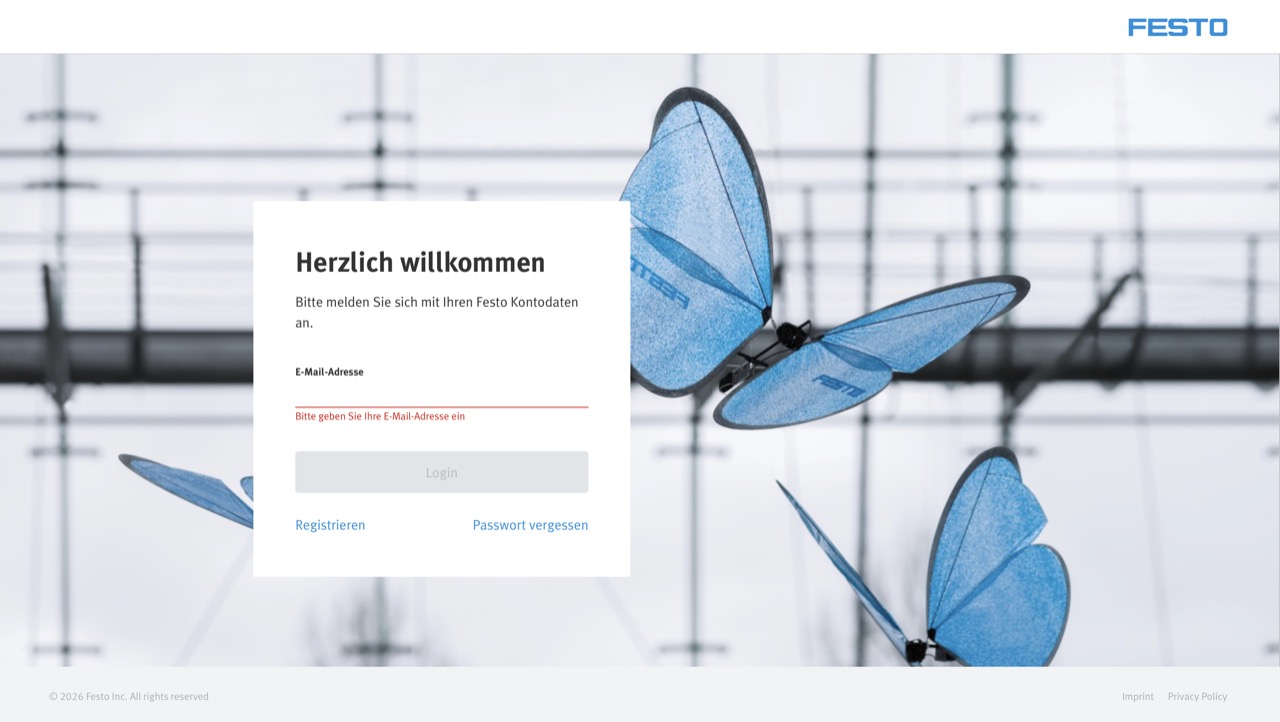
This project focused on evaluating the usability of Festo’s login system across multiple connected platforms: Festo LX, Festo.com and FluidSIM. The project was developed in the Human-Computer Interaction context and followed a full usability research process.
The goal was to understand how first-time users experience registration, login, logout, Single Sign-On, password changes and saved password behavior. Instead of redesigning the interface directly, the focus was on identifying usability problems and deriving clear improvement recommendations.
Context
The study examined the login and onboarding experience across connected Festo platforms. Users had to understand registration, central account logic, Single Sign-On, logout states, password changes and stored passwords.
The research process included planning the test setup, creating realistic task scenarios, conducting remote usability tests, documenting observations, evaluating quantitative data and translating the findings into recommendations.
Challenge
The main challenge was that login systems often seem simple, but strongly influence trust, orientation and perceived product quality.
In this case, users had to move between several platforms while understanding whether they were interacting with one system, a central account or separate login states. The challenge was to identify where users felt uncertain, where the system logic was unclear and how the experience could become more transparent, consistent and cognitively easier to follow.
My Role
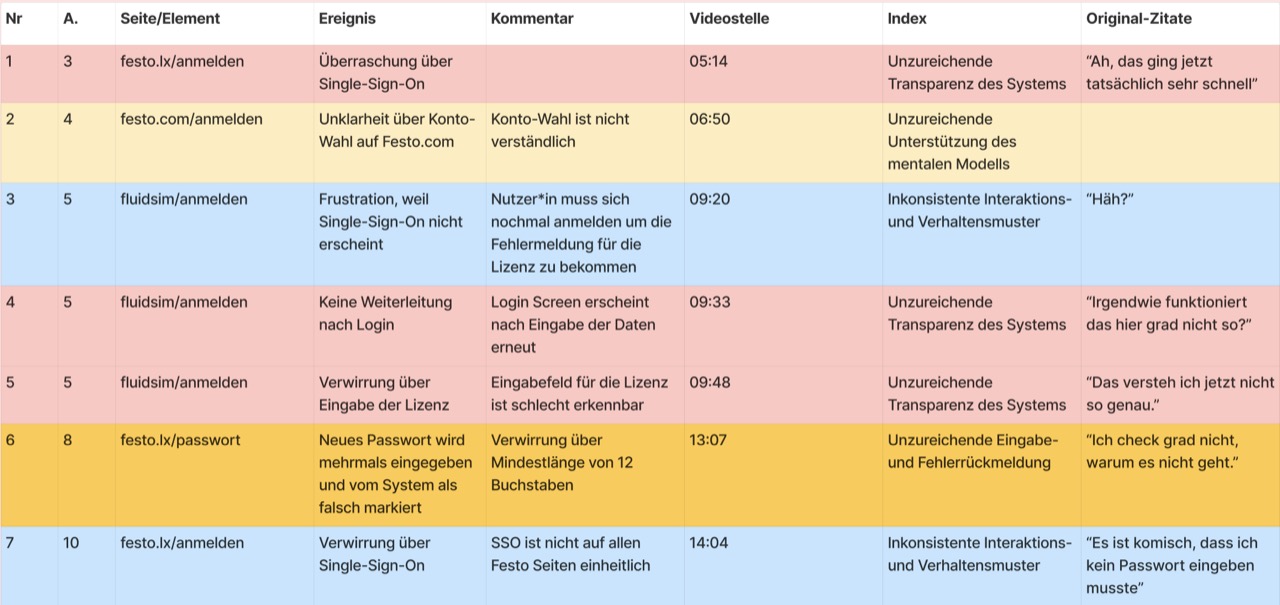
My main contribution was the quantitative evaluation of the usability study. I analyzed and interpreted the INTUI and AttrakDiff results, connected them with the qualitative observations and helped translate the data into findings about usability, intuitiveness and perceived product quality.
I also contributed to structuring the research findings so they could be compared across participants and related back to the evaluation goals.
My tasks included:
- analyzing INTUI questionnaire results
- interpreting AttrakDiff data
- connecting quantitative metrics with qualitative observations
- supporting the evaluation of usability problems
- helping structure findings across participants
- contributing to the final recommendations
Process
We began by mapping the login experience and preparing the usability test structure in FigJam. The board documented the project chronologically, starting with research planning, platform flows, interface screenshots, task preparation and moderation material.
For the usability test, we created a structured moderation guide including an introduction, consent information, a Thinking Aloud exercise, realistic task scenarios, a final interview and standardized questionnaires.
The tests were conducted remotely via Zoom with screen sharing. After the sessions, we reviewed the recordings, documented observations, identified Critical Incidents and grouped recurring usability issues into broader themes.
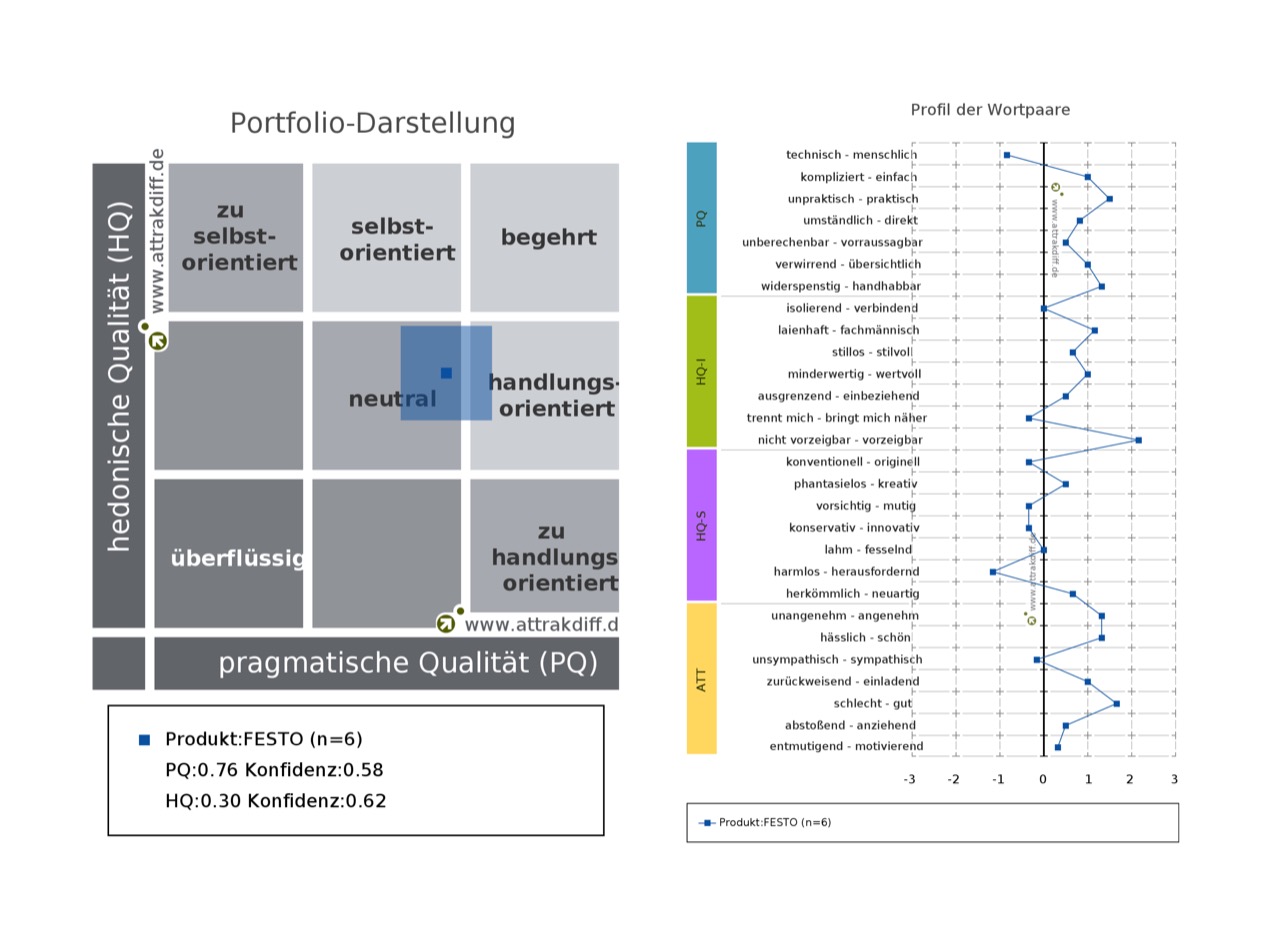
Qualitative Data
To support the qualitative findings, we also used quantitative methods such as Task Success Rate, INTUI and AttrakDiff, which provided a more reliable picture of the user experience.
Outcome
The system was perceived as visually clear, structured and professionally designed. However, several usability issues appeared repeatedly throughout the login and onboarding flow. The Single Sign-On logic was not always clearly communicated, password requirements were not visible early enough, and error messages were not always helpful.
Based on these findings, we identified improvement areas such as clearer SSO communication, more transparent system status feedback, and a more consistent login and logout experience across platforms. The insights were captured in a detailed report.
Learnings
This project showed me how strongly small moments of uncertainty can affect the perceived usability of a system, especially in sensitive processes like authentication. I learned that a system can work technically, but still feel unclear if users do not understand the logic behind the process. I also learned how quantitative UX methods can strengthen qualitative observations.